
The Earth Prize 2027 · Prep Programme at UWR Dubai
Programme roadmap
From a real-world environmental problem to a validated solution and a complete Earth Prize Blueprint, coached in person over 11 weekends at Unique World Robotics, Dubai.
- Ages 13–19
- Teams of up to 5
- Sat & Sun 3:30–5:30 PM
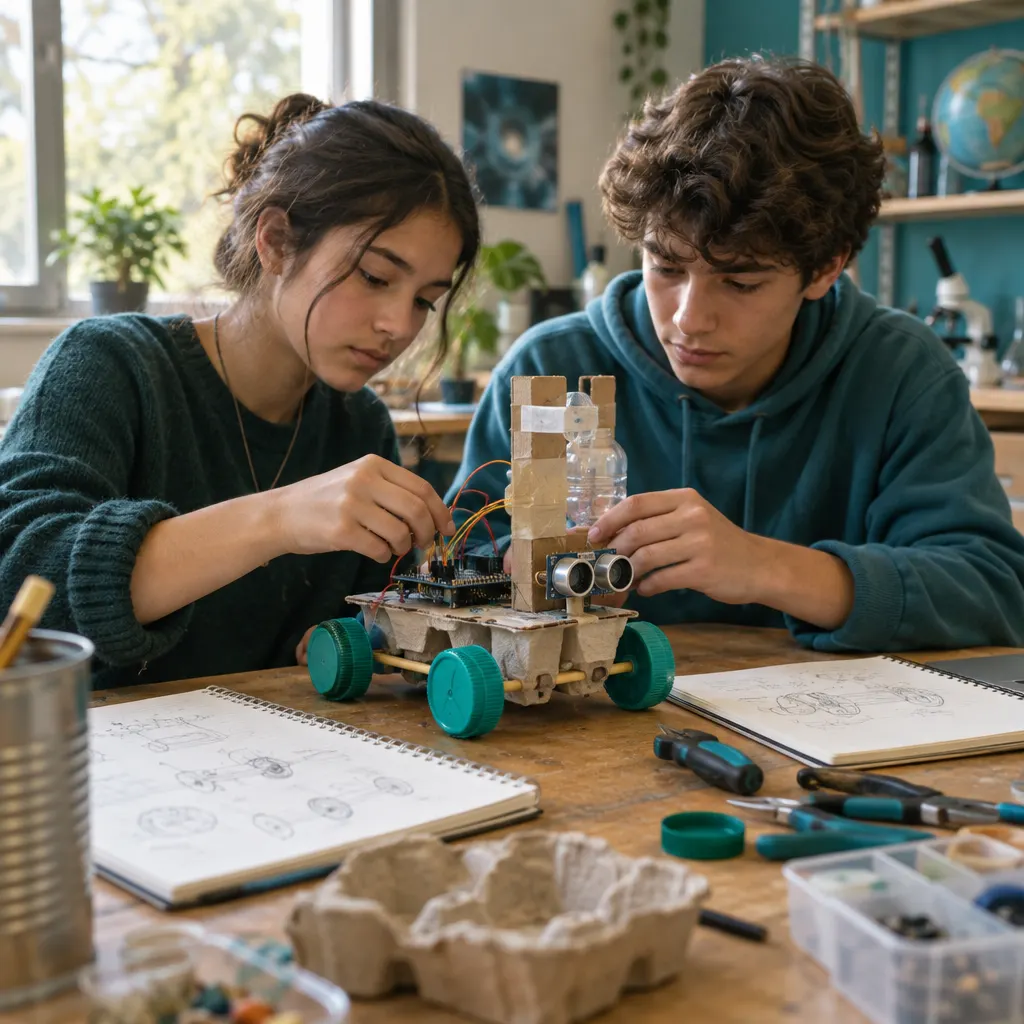
01 · A strong foundation
What makes a strong entry
| Problem-first innovation | Understand who is affected, gather evidence and validate the need before choosing a solution |
|---|---|
| Practical proof | Build or test something tangible, gather feedback and learn from the results |
| Feasibility and planning | Consider cost, resources, risks, partners and realistic next steps |
| Communication with purpose | Explain the problem and solution clearly, backed by evidence and a strong pitch |
| Global relevance | Solve a local challenge while thinking about how it could work elsewhere |
02 · The journey · Stage 1
Discover & define
WEEKENDS 1–3
Explore environmental challenges and choose one worth solving.
What we cover
- Competition orientation, team roles and research ethics
- Environmental issue mapping and source evaluation
- First stakeholder map and problem-statement drafting
- Shortlisting and comparing candidate problems. Coaches stop teams jumping straight to a product idea.
Output
A focused problem statement, initial evidence list and a clear description of who or what is affected.
02 · The journey · Stage 2
Validate the problem
WEEKENDS 4–5
Evidence, interviews with the people affected, baseline data.
What we cover
- Desk research using reliable reports and data
- Interviews or observations with consent and safeguarding
- Baseline measurements
- Existing-solution and prior-art scan
Output
A validated problem backed by evidence and stakeholder insight, and a clear explanation of why current approaches fall short.
02 · The journey · Stage 3
Design, build & test
WEEKENDS 6–8
Build a prototype or test, measure honestly, improve.
What we cover
- Comparing concepts against user needs and environmental benefit
- A minimum viable prototype or credible test pathway (physical prototype, digital tool, process, material experiment)
- Measurable test criteria and honest results
- User feedback, limitations and improvements
Output
Proof-of-concept evidence, test records, photos/video and documented learning.
02 · The journey · Stage 4
Plan & build the Blueprint
WEEKENDS 9–10
Budget, feasibility, impact plan and pitch video.
What we cover
- User need, solution and differentiators
- Itemised budget with materials, skills and partners
- Next steps, risks and mitigation
- Visuals and a short structured pitch video
- Permissions, credits, citations and IP. All students must be registered by 10 January.
Output
A complete Blueprint draft, a credible implementation plan and a clear pitch.
02 · The journey · Stage 5
Review, refine & submit
WEEKEND 11
Mock review against the criteria, then submit.
What we cover
- Mock review against the published evaluation criteria
- Verifying claims, data, budget calculations and references
- Presenting prototype results and limitations honestly
- Checking fields, media, contributors and consent
Output
A complete, checked submission made by the Team Lead by 31 January 2027.
03 · Evidence of the work
Deliverables
| Problem research file | Problem statement, source log, data extracts, interview notes, observations, baseline evidence |
|---|---|
| Solution comparison | Alternative concepts, selection rationale, user requirements, comparison with existing solutions |
| Prototype evidence | Sketches, photos, bill of materials, test plan, results, user feedback, iteration history |
| Impact & feasibility plan | Beneficiaries, measurable outcomes, implementation steps, partners, costs, risk mitigation |
| Pitch & supporting media | Problem, solution, evidence, differentiator and next steps |
| Submission checklist | Registration, contributors, permissions, source credits, IP, final portal review |
04 · Skills for the future
Learning outcomes
| Environmental literacy | Explain a specific challenge in its community or ecosystem context |
|---|---|
| Research & validation | Separate assumptions from evidence and use stakeholder insight |
| Design & prototyping | Build a testable solution and iterate on evidence |
| Systems thinking | Weigh materials, lifecycle, unintended impacts, scalability |
| Planning & entrepreneurship | Itemised budget, next steps, risk controls, partnerships |
| Communication | Present work clearly, including limitations and evidence |
05 · Published competition dates
The competition pathway
| 10 Jan 2027 | Registration closes |
|---|---|
| 31 Jan 2027 | Blueprint submissions close |
| 3 Mar 2027 | Scholars announced |
| 3–9 May 2027 | Regional Winners announced |
| 10–23 May 2027 | Public voting |
| 28 May 2027 | Awards ceremony · Global Winner announced |
06 · At UWR Dubai
Programme details
| Starts | Saturday 21 November 2026 |
|---|---|
| Schedule | Saturday & Sunday, 3:30–5:30 PM · 11 weekends |
| Venue | Unique World Robotics, Hamsah A Building, Near BurJuman Metro Exit 2, Al Karama, Dubai, UAE |
| Programme fee | AED 2,300 + VAT · Coaching through Blueprint submission |
| Optional Scholar-phase coaching | AED 2,500 + VAT · Only if selected as Earth Prize Scholars |
Contact UWR
- Call & WhatsApp +971 58 227 3479
- robotics@uniqueroboticsedu.com
- uniqueworldrobotics.com
- Get directions
- Sat–Thu 8:00 AM – 8:00 PM · Fri 10:30 AM – 8:00 PM