
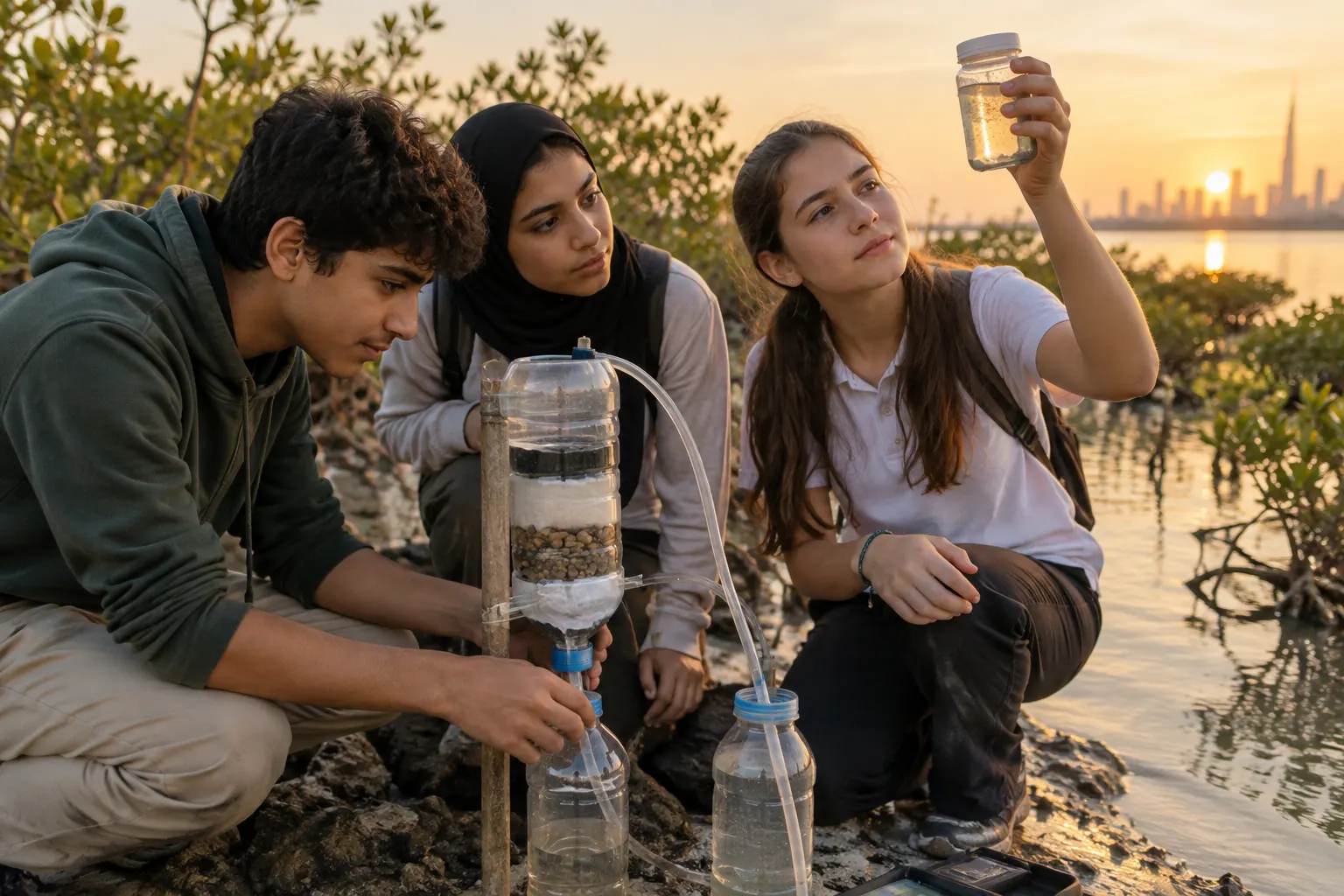
Big ideas can start at 13.
Your child, making a real difference.
11 weekends of hands-on research and development. A real environmental problem, a tested solution, and a global competition submission your child can put in their university portfolio.
- Starts 21 Nov
- Ages 13–19
- Sat & Sun 3:30–5:30 PM
6,095
entries in The Earth Prize 2026
35
teams selected as Scholars
7
world regions, including the Middle East
USD 10,000
to each 2027 Regional Winner
The world's largest environmental competition for teenagers.
Run by The Earth Foundation, a Swiss non-profit founded in Geneva in 2020, The Earth Prize challenges students to find a real environmental problem and build a solution that can actually work. Game-changing ideas can come from anywhere, including your child.
Who can enter
- Born between 2007 and 2014 (ages 13–19)
- Enrolled in a school, homeschool or another educational programme
- Individually or in teams of up to five, from any school
- Entry is free.
Challenge areas
- Waste
- Pollution
- Ecosystems
- Biodiversity
- Climate
- Land
Competition dates
10 Jan 2027
Registration closes
31 Jan 2027
Blueprint submissions close
3 Mar 2027
Scholars announced
3–9 May 2027
Regional Winners announced
10–23 May 2027
Public voting
28 May 2027
Awards ceremony · Global Winner announced
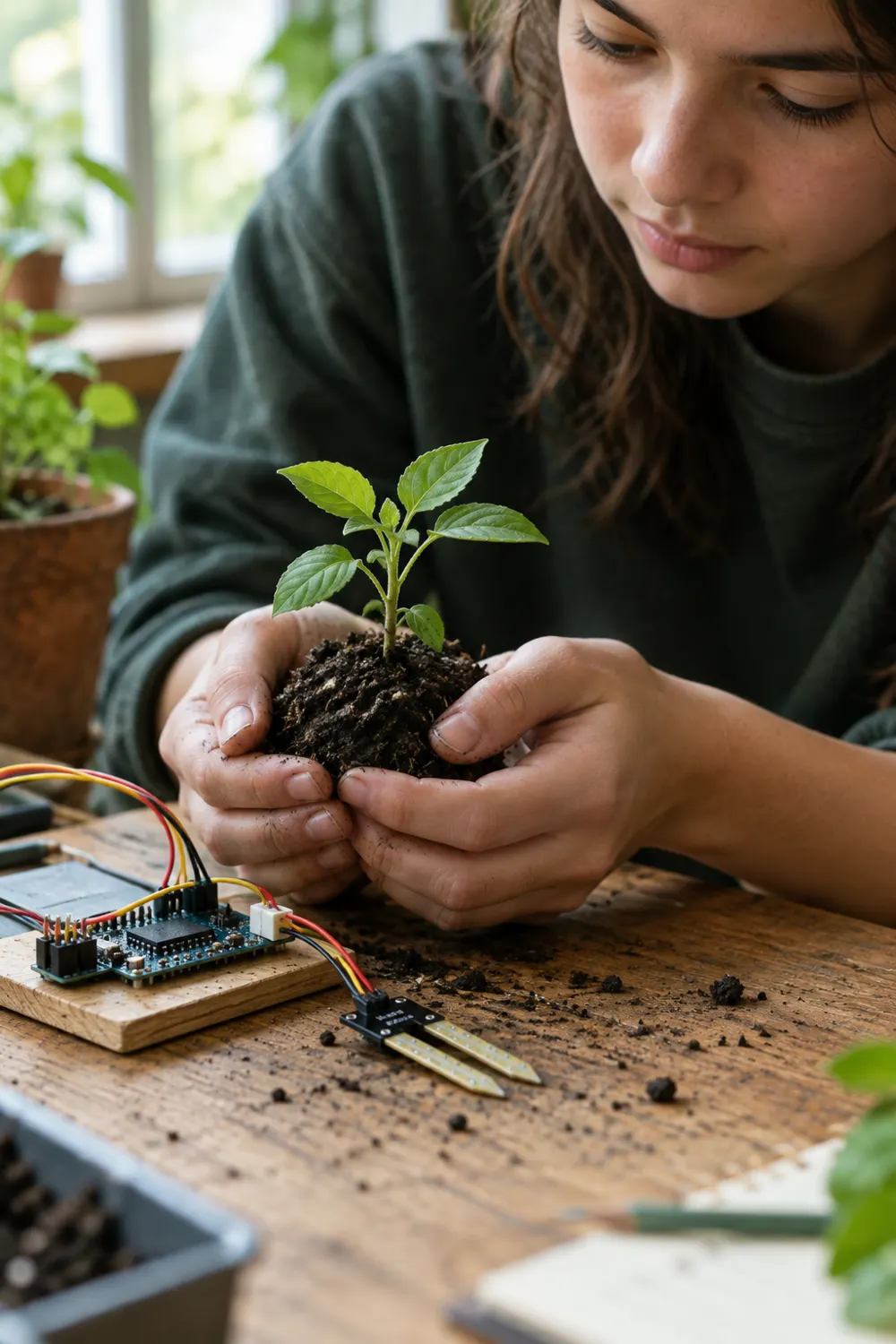
A project doesn't need to be high-tech to win.
Students like yours are already doing it.
Recent regional winners didn't start with a lab or a big budget. They started with a real problem and built something they could test.
2025 · Middle East winner
Ghayathi Common School, Abu Dhabi
Four students built EcoMind Academy, a gamified app teaching sustainability through maths and English. The first-ever winners from the UAE.
2026 · Asia winner
Plas-Stick, India
Three 16-year-olds made a magnetic tamarind powder that pulls microplastics out of water.
2026 · Middle East winner
Build Hope, Palestine
Two sisters recycling rubble into reusable building blocks for their community.
What they share: a clearly identified need, a distinct response, and a plan to test it in the real world.
Entry is free. Standing out isn't.
< 1 in 100
entries reached the Scholar stage in 2026: 35 out of 6,095.
Official mentoring happens online, through university-student mentors. We coach your child's team in person, every weekend, against the published judging criteria.
How judges score a Blueprint · 25 points
- Problem Validation5
- Proof of Concept5
- Solution Quality4
- Next Steps & Commitment4
- Feasibility & Planning4
- Communication & Inspiration3
10 of 25 points go to proving the problem is real and testing the idea. That is exactly what our weekends are built around.
11 weekends. One real problem.
Coached every Saturday and Sunday, 3:30–5:30 PM at UWR Dubai, following The Earth Prize journey from problem to Blueprint.
1Discover & defineWEEKENDS 1–3Explore environmental challenges and choose one worth solving.
What we cover
- Competition orientation, team roles and research ethics
- Environmental issue mapping and source evaluation
- First stakeholder map and problem-statement drafting
- Shortlisting and comparing candidate problems. Coaches stop teams jumping straight to a product idea.
Output
A focused problem statement, initial evidence list and a clear description of who or what is affected.
2Validate the problemWEEKENDS 4–5Evidence, interviews with the people affected, baseline data.
What we cover
- Desk research using reliable reports and data
- Interviews or observations with consent and safeguarding
- Baseline measurements
- Existing-solution and prior-art scan
Output
A validated problem backed by evidence and stakeholder insight, and a clear explanation of why current approaches fall short.
3Design, build & testWEEKENDS 6–8Build a prototype or test, measure honestly, improve.
What we cover
- Comparing concepts against user needs and environmental benefit
- A minimum viable prototype or credible test pathway (physical prototype, digital tool, process, material experiment)
- Measurable test criteria and honest results
- User feedback, limitations and improvements
Output
Proof-of-concept evidence, test records, photos/video and documented learning.
4Plan & build the BlueprintWEEKENDS 9–10Budget, feasibility, impact plan and pitch video.
What we cover
- User need, solution and differentiators
- Itemised budget with materials, skills and partners
- Next steps, risks and mitigation
- Visuals and a short structured pitch video
- Permissions, credits, citations and IP. All students must be registered by 10 January.
Output
A complete Blueprint draft, a credible implementation plan and a clear pitch.
5Review, refine & submitWEEKEND 11Mock review against the criteria, then submit.
What we cover
- Mock review against the published evaluation criteria
- Verifying claims, data, budget calculations and references
- Presenting prototype results and limitations honestly
- Checking fields, media, contributors and consent
Output
A complete, checked submission made by the Team Lead by 31 January 2027.
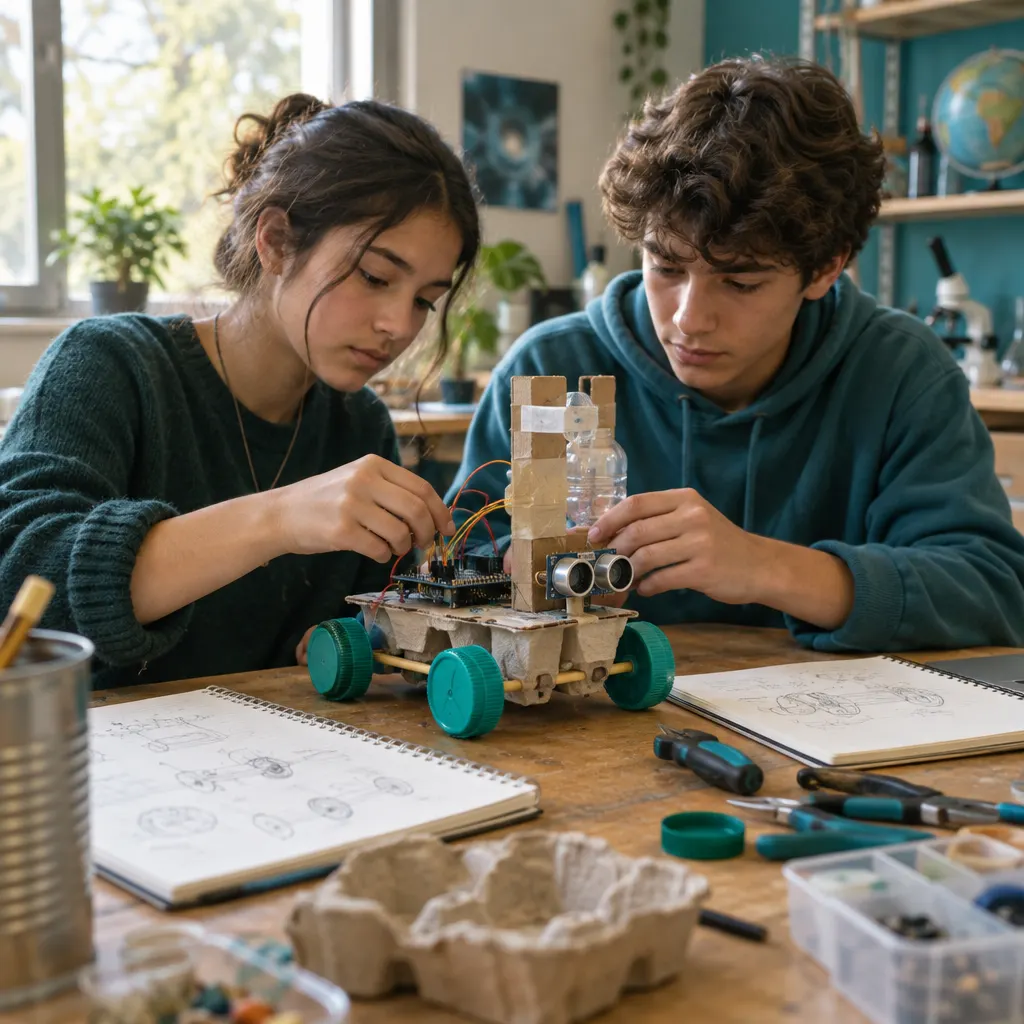
Proof, not participation.
A project their portfolio can prove.
Every student leaves with a documented, tested project and real research and development experience to bring to university applications, scholarship essays and interviews.
What a student can showcase
- Research capability
- Technical and creative ability
- Evidence of impact
- Leadership and collaboration
- Communication and reflection
Great for students interested in engineering, environmental science, computer science, design or entrepreneurship.
Deliverables
Problem research file
Problem statement, source log, data extracts, interview notes, observations, baseline evidence
Solution comparison
Alternative concepts, selection rationale, user requirements, comparison with existing solutions
Prototype evidence
Sketches, photos, bill of materials, test plan, results, user feedback, iteration history
Impact & feasibility plan
Beneficiaries, measurable outcomes, implementation steps, partners, costs, risk mitigation
Pitch & supporting media
Problem, solution, evidence, differentiator and next steps
Submission checklist
Registration, contributors, permissions, source credits, IP, final portal review
R&D skills they build
Environmental literacy
Explain a specific challenge in its community or ecosystem context
Research & validation
Separate assumptions from evidence and use stakeholder insight
Design & prototyping
Build a testable solution and iterate on evidence
Systems thinking
Weigh materials, lifecycle, unintended impacts, scalability
Planning & entrepreneurship
Itemised budget, next steps, risk controls, partnerships
Communication
Present work clearly, including limitations and evidence
Everything you need to know.
- Starts
- Saturday, 21 November 2026
- Schedule
- Every Saturday & Sunday, 3:30–5:30 PM
- Venue
- Unique World Robotics, Hamsah A Building, Near BurJuman Metro Exit 2, Al Karama, Dubai, UAEGet directions
- Who can join
- Students born 2007–2014 (ages 13–19)
- Teams
- Up to 5 students, from any school
- Fee
- AED 2,300 + VAT, covering coaching through the 31 January 2027 Blueprint submission
Entry to The Earth Prize itself is free. Our fee covers in-person coaching only.
Selected as Earth Prize Scholars? Optional continued coaching through the Scholar and Regional Winner phases is AED 2,500 + VAT.
When to join
Join from day one
Start with the team on Saturday 21 November
Joining a little later?
We run a catch-up session so your child doesn't miss the foundations
Seats are limited
Teams are formed in the first weeks. Request a callback to discuss a place
What happens after 31 January.
Submitting the Blueprint is the first major milestone. If your child's team is selected as one of 35 Earth Prize Scholars, they get 1:1 mentoring from The Earth Prize and can continue coaching with us.
3 Mar
Scholars announced
3–9 May
Regional Winners announced
USD 10,000 each
10–23 May
Public voting
28 May
Awards ceremony
Global Winner
Questions parents ask.
Is The Earth Prize free to enter?
Yes. Registration and submission are free for every student. Our fee covers in-person coaching only.
Is UWR an official partner of The Earth Prize?
No. This is an independent coaching programme by Unique World Robotics. We are not affiliated with or endorsed by The Earth Foundation.
My child has no robotics or science background. Can they join?
Yes. Past winners built apps, materials and community projects. Curiosity matters more than technical skill.
Can my child join with friends from another school?
Yes. Teams can have up to five students from any school.
Do you guarantee a prize or Scholar selection?
No. Fewer than 1 in 100 entries reached the Scholar stage in 2026. We focus on a well-researched, tested and properly submitted project.
Who registers on The Earth Prize website?
Every team member registers individually by 10 January 2027. Under-18s need parent or guardian consent. We walk families through it.
What if my child misses a weekend?
Let your coach know in advance. Teams share their project file, so your child can pick up where the team left off.
What does my child need to bring?
Curiosity and a notebook. If they have a laptop or tablet, bring it for research and the pitch. We'll talk through anything else the project needs in the first weeks.
Request a callback.
Leave your details and our team will call you to discuss the programme and answer your questions.
Prefer WhatsApp? Message us on +971 58 227 3479